OneCasino account verification, limits and geolocation rules
 Available in US
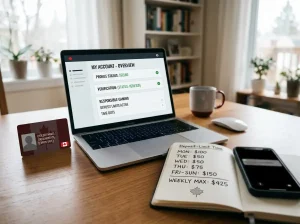
A OneCasino account is more than a login and payment wallet. The operator can request identity or background documentation, verification can become part of the withdrawal path, and the terms prohibit disguising or interfering with IP address or geolocation. The account also includes deposit limits and other responsible-gambling controls, so the useful way to understand it is as a sequence: access the account, set payment and limit preferences, keep personal details consistent, and be prepared for checks before a cashout is completed.
Inhaltsverzeichnis
- Deposit limits give the account a built-in spending boundary
- Account access works best when personal and payment details stay consistent
- Identity and background checks can become part of normal account use
- Withdrawal verification can add a check before funds are processed
- Geolocation rules make location masking an account-term issue
- Questions about OneCasino account verification
- Consistent details make later checks easier to handle
Deposit limits give the account a built-in spending boundary
OneCasino provides deposit limits across three time windows: 24 hours, 7 days and 30 days. The operator says an increase to a deposit limit takes effect after 7 days. That delay matters because it prevents an immediate upward change from overriding a lower limit in the same moment a player decides they want to deposit more.
A practical way to use the controls is to choose the time window that matches how you actually budget. A 24-hour limit is useful for daily exposure, while a 7-day or 30-day limit can align more closely with a weekly or monthly entertainment budget. The limit should be set from money already allocated for gambling, not adjusted in response to a losing session.
| Limit window | What it controls | Practical use |
|---|---|---|
| 24 hours | Total deposits across a daily window | Caps short-term funding |
| 7 days | Total deposits across a weekly window | Aligns with a weekly entertainment budget |
| 30 days | Total deposits across a monthly window | Creates a broader monthly ceiling |
| Increase delay | Higher limit takes effect after 7 days | Adds time between the request and the higher ceiling |
Account controls listed for OneCasino also include wager, loss, session or time limits, self-exclusion and self-assessment tools. Together, those controls cover more than deposits: they can address money spent, time in play and the decision to stop access entirely for a period.
- Set a deposit limit before the first payment rather than after a loss.
- Use a time window that matches the way you budget entertainment spending.
- Treat the 7-day increase delay as a cooling-off period, not an obstacle to bypass.
- Use self-exclusion when a simple deposit cap is not enough to create distance from gambling.
Account access works best when personal and payment details stay consistent
The account sits at the centre of OneCasino’s browser-based service. It connects profile details, payment activity, bonus status, game history and account controls. Keeping those details consistent reduces avoidable friction later, especially when a payment needs to be matched back to the account or a verification request asks for supporting information.
Support is available through OneCasino’s help centre and contact channels; live chat and email are also listed as support options. Those channels are useful for account questions that cannot be solved by changing a setting yourself, such as locating a requested document category or understanding which account detail needs attention.
- Use your own accurate personal details for the account.
- Keep the payment method associated with the account in your own name where the method requires account ownership.
- Review deposit limits before funding the account.
- Keep access credentials private and use the same account rather than creating overlapping profiles.
- Use the help centre or support channel when a requested account step is unclear.
On phones and tablets, OneCasino uses responsive browser access rather than relying on a dedicated app. The mobile guide explains how that browser path affects sign-in, session security and everyday account use on a smaller screen.
A useful account routine is to review the profile after any ordinary change that affects contact or payment details. For example, changing the email address used for account messages is different from changing the owner of a payment method. Keep each change limited to the field that genuinely changed, and retain ordinary records such as payment confirmations until the related transaction is settled.
Support is most useful when the question is specific. Instead of asking whether an account is “okay,” identify the action that is blocked: sign-in, document upload, deposit, withdrawal request or limit change. That gives the support channel a concrete account event to address and reduces the chance of mixing a payment issue with an identity-check question.
Identity and background checks can become part of normal account use
OneCasino reserves the right to perform background checks and request documents. The operator’s terms therefore make verification an account condition that can arise when additional identity or account information is needed. This is not limited to the moment of registration; a request can occur later in the account lifecycle.
The useful preparation is straightforward. Keep the core information on the account accurate, make sure submitted documents belong to the account holder, and respond to the exact request rather than sending unrelated files. If a document has several pages or sides, check whether the request covers all of them before submission.
- Identity evidence can be requested by OneCasino.
- Background documentation can also be part of an account check.
- The requested material should match the account holder’s details.
- A later account check does not mean the initial login or deposit process was incomplete; checks can arise at different stages.
Verification is best treated as a normal account-control process rather than a last-minute cashout task. That mindset makes it easier to keep profile and payment details aligned from the start.
Withdrawal verification can add a check before funds are processed
Verification can be required before a withdrawal is processed. That means a successful deposit does not remove the possibility of later account checks. When a withdrawal request reaches the review stage, the operator can ask for identity or background material before moving the payment forward.
The payment path also has its own rules. Withdrawals are generally routed back through the deposit method, with bank-account routing used for non-refundable methods. For Canada, OneCasino’s terms include a C$10 deposit condition before the first withdrawal can be effected. Those payment mechanics sit alongside verification rather than replacing it.
The withdrawals guide covers the routing rule, first-withdrawal condition and timing language in detail. At account level, the key point is simpler: keep personal and payment details consistent so a document request can be answered without introducing a mismatch.
- Submit the withdrawal through the account using the available payment route.
- Check the account and support messages for any verification request.
- Provide the specific identity or background documentation requested.
- Keep copies of the relevant transaction and account records until the cashout is complete.
This sequence separates the parts you control from the parts handled by the operator. You can keep details accurate and respond to document requests; you cannot turn a processing estimate into a guaranteed completion time.
Geolocation rules make location masking an account-term issue
OneCasino’s terms say a player must not disguise or interfere with their IP address or geolocation. That makes VPN-style location masking and similar interference an account-rule issue rather than a neutral technical preference. If the service is being used on mobile data, home broadband or public Wi-Fi, the important point is to let the normal connection report its actual location rather than altering it.
Geolocation rules can matter during both ordinary play and an account review because connection data can form part of the account history. Changing networks naturally is different from deliberately masking location, but the safest account practice is consistent: do not use tools designed to make the service think you are somewhere else.
- Do not disguise the account’s IP address or location.
- Avoid tools whose purpose is to make the service read a false location.
- Keep account details accurate when travelling or changing normal network connections.
- Use support if an ordinary connection change triggers an account-access problem.
These rules are part of the account relationship and can affect how activity is reviewed. They are also a good reason to avoid treating technical workarounds as a solution to an access or account problem.
Questions about OneCasino account verification
Can OneCasino ask for identity documents?
Yes. OneCasino may request identity and background documentation, and verification can be required before a withdrawal is processed.
Does OneCasino allow players to disguise their location?
No. OneCasino’s terms say players must not disguise or interfere with their IP address or geolocation.
What deposit limits does OneCasino provide?
OneCasino provides deposit limits for 24 hours, 7 days or 30 days. Increases take effect after 7 days.
What other responsible-gambling controls are listed for OneCasino?
Account controls listed for OneCasino include wager, loss, session or time limits, self-exclusion and self-assessment alongside deposit limits.
Consistent details make later checks easier to handle
OneCasino’s account rules connect four practical areas: accurate profile information, payment consistency, possible identity checks and responsible-gambling controls. The strongest account habit is to set limits early and keep the details used for payments and verification aligned with the account holder. That makes a later document request easier to answer and keeps the focus on the actual check rather than on preventable mismatches.